 Image 1 of 1
Digitalis purpurea 'Alba' (white foxglove) is a biennial or short-lived perennial grown for its tall, elegant flower spikes and cottage-garden look. Year one makes a rosette of soft, gray-green, slightly hairy leaves; year two sends up 60–180 cm stems with many nodding, tubular bells along one side.
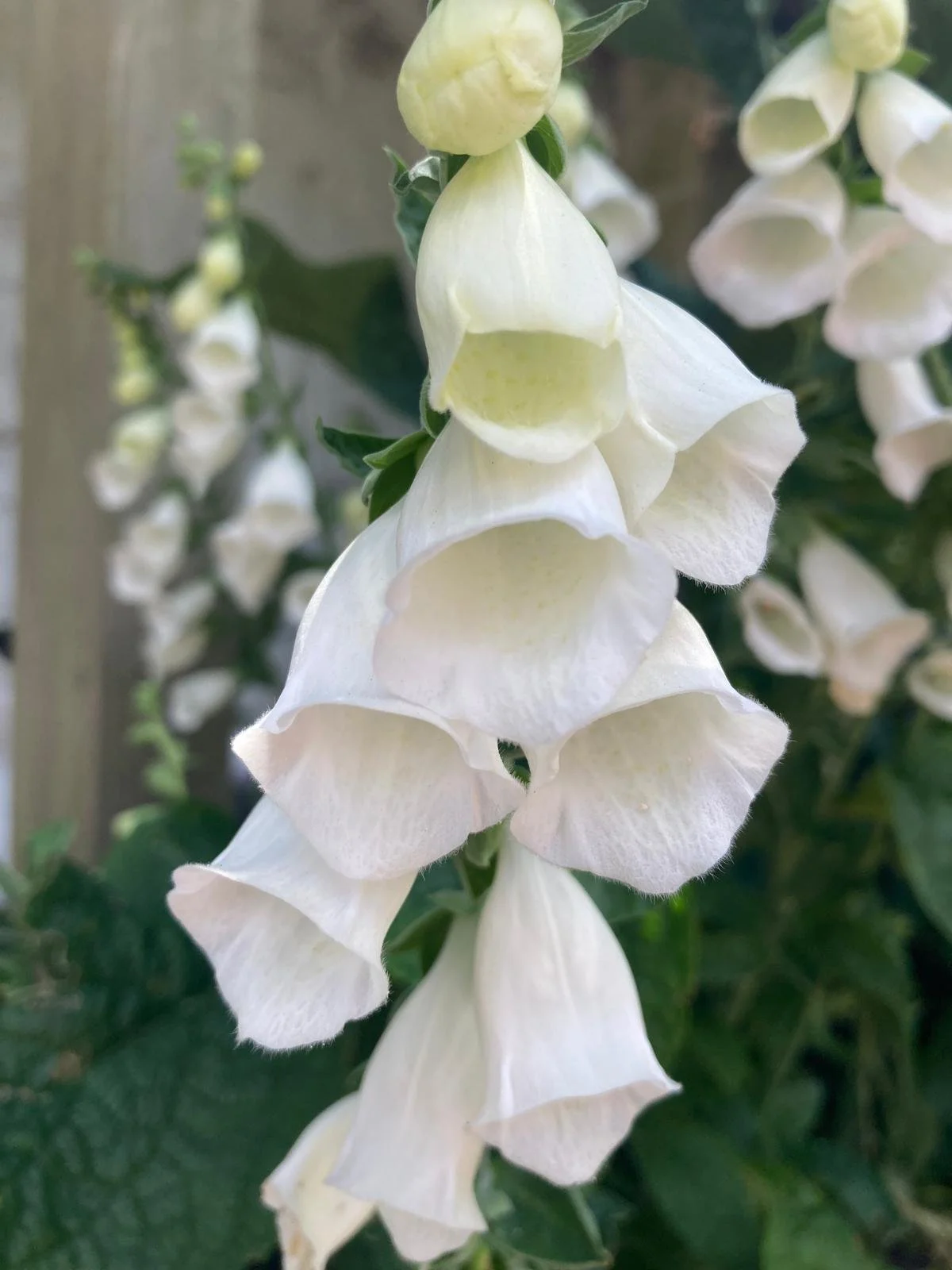
Flowers: Pure white, sometimes with a creamy throat or faint pale speckles. Blooms about 2.5–5 cm long and attract bees.
Foliage and habit: Downy, lance-shaped basal leaves form a tidy clump; stems are upright and add height to borders and mixed beds.
Growing: Likes partial shade to full sun (best in cool summers), fertile, well-drained soil, and steady moisture. Prefers humus-rich, slightly acidic to neutral soil. Self-seeds easily—leave some stalks if you want it to naturalize.
Season and uses: Flowers late spring into early summer; may repeat in mild areas. Good for back borders, woodland edges, naturalized spots, and pollinator gardens. White blooms contrast nicely with darker foliage and pastel cottage palettes.
Caution: All parts are poisonous if eaten. Keep away from children and pets and wear gloves when handling sap-prone foliage. This open-pollinated variety suits classic cottage and sweet-pea borders.
200 seeds per packet
Digitalis purpurea 'Alba' (white foxglove) is a biennial or short-lived perennial grown for its tall, elegant flower spikes and cottage-garden look. Year one makes a rosette of soft, gray-green, slightly hairy leaves; year two sends up 60–180 cm stems with many nodding, tubular bells along one side.
Flowers: Pure white, sometimes with a creamy throat or faint pale speckles. Blooms about 2.5–5 cm long and attract bees.
Foliage and habit: Downy, lance-shaped basal leaves form a tidy clump; stems are upright and add height to borders and mixed beds.
Growing: Likes partial shade to full sun (best in cool summers), fertile, well-drained soil, and steady moisture. Prefers humus-rich, slightly acidic to neutral soil. Self-seeds easily—leave some stalks if you want it to naturalize.
Season and uses: Flowers late spring into early summer; may repeat in mild areas. Good for back borders, woodland edges, naturalized spots, and pollinator gardens. White blooms contrast nicely with darker foliage and pastel cottage palettes.
Caution: All parts are poisonous if eaten. Keep away from children and pets and wear gloves when handling sap-prone foliage. This open-pollinated variety suits classic cottage and sweet-pea borders.
200 seeds per packet